2. Wood Light Setups
2.1 Setup Principles & Very Rough Evaluations
Nether portals light if fire is placed anywhere inside its built portal frame. I have seriously considered the idea of building a 3x3 portal for better lighting odds, but ultimately decided that it is not worth it. In this post, we will be talking under the context of a 2x3 wood light portal.
A nether portal won’t light if there is any non-air block present inside the portal frame, so we can only ever light an air block inside the portal through a block adjacent that is on the side of it. As stated in the last chapter, an air block catches fire from lava so long as it is adjacent to a flammable block, and the speed it does that is constant(when it is random ticked), regardless of what the flammable block actually is or how many there are. An air block catches fire from another fire, the rate dictated by the block with the highest encouragement level adjacent to it, and more blocks that spread fire does not help the process as well. So in order to maximumly utilize the air blocks present in the portal frame, at least one flammable (and can spread fire for that matter) block needs to be present on either side of that air, but more does not help.
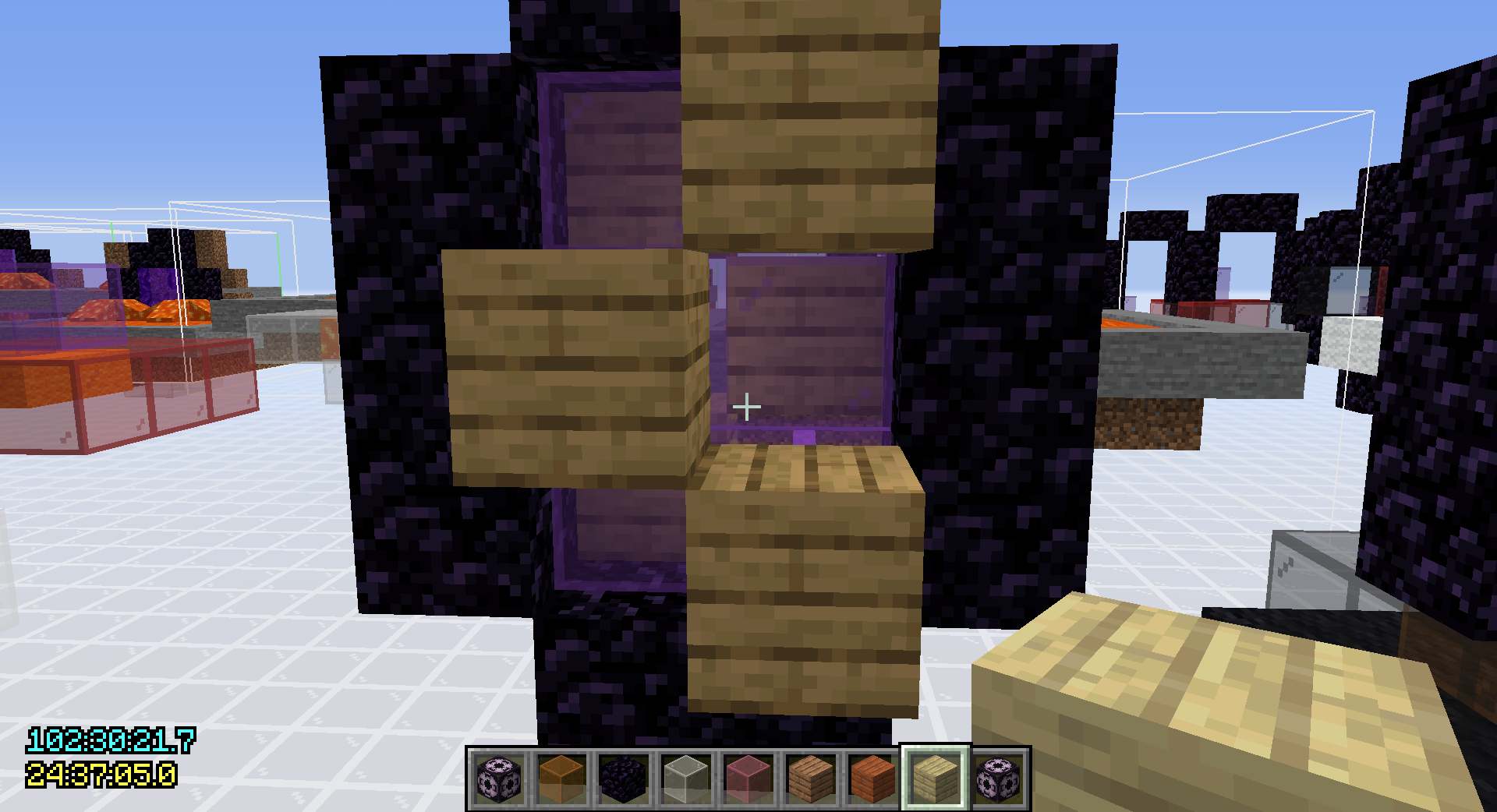
Of course, sometimes you cannot really fulfill this constraint, like wood lighting a magma portal or lighting with dead bush and hay blocks and stuff, but it is a good general rule of thumb and can even affect what you do in certain situations.
This only gives a very vague instruction on how a wood light setup should be like, but it is unfortunately the one of the two things that is simple in terms of wood light setups. The other thing that is simple is the process that lava generate fire directly inside the portal. This is mostly how a portal ends up being lit, and as we’ve shown in the last chapter, we can work out exactly how much a lava block contributes to a portal air block lighting. Unfortunately calculating that for the 5x5 second layer requires prior information on the structure of the 3x3 first layer, so such analysis can only be done after the setup is constructed.
For example, here are the heat maps of every block of lava can contribute to the total odds of directly lighting the portal after the setup is constructed for my Micro Improved Wood Light Setup for each layer, compared to where lava is actually placed in the setup:
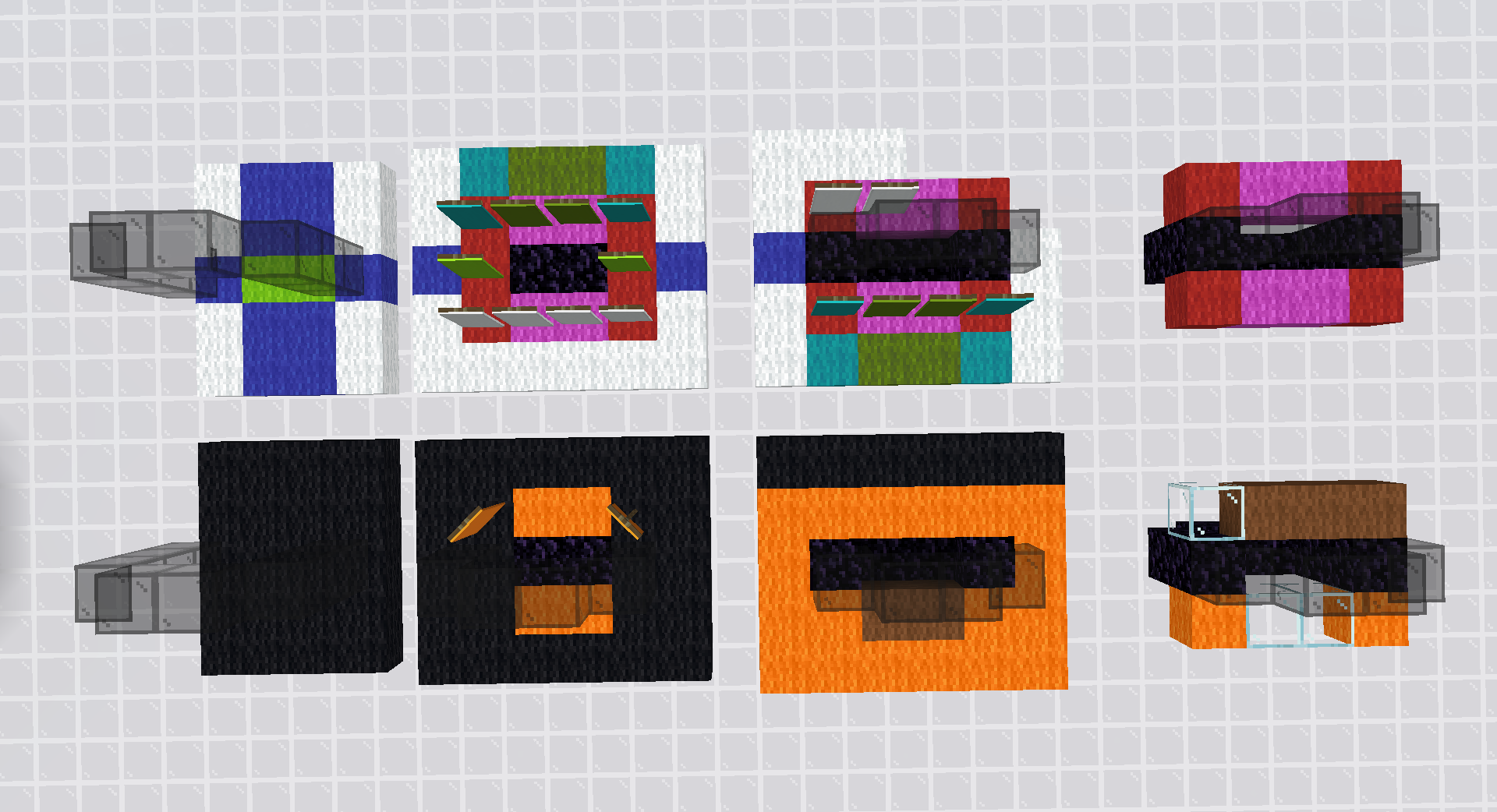
The banners in the heat map just represents addition to the block below it, and the coloring conventions follow the definition from the last chapter. You can see there are two orange banners I placed in the construct map, which I also recommend you prioritize mining for slightly extra lighting chance if you have nothing better to do. (they are very kindly placed by the game if you are at a 2 deep lava pool.)
You can also see that very few blocks matter for directly lighting at the second layer, which the setup placed the two lava right where they should be, and anything above does not have any affect for that at all. You can visually see why placing lava on top for a lava waterfall is so inefficient. (But it doesn’t make them completely worthless, specifically lava from the third layer can light air on top of the third layer blocks, which will partially lead to some very interesting results as I will show later.)
But there are still a fair amount of portals that do not light from fire generation, but fire spread. Trying to work out analytically what every block does exactly in this context is just impossible in terms of computational efficiency, and the best way to verify is really to run simulations. There is a good first order estimate, that is to work out how much every air block catches on fire directly from lava.
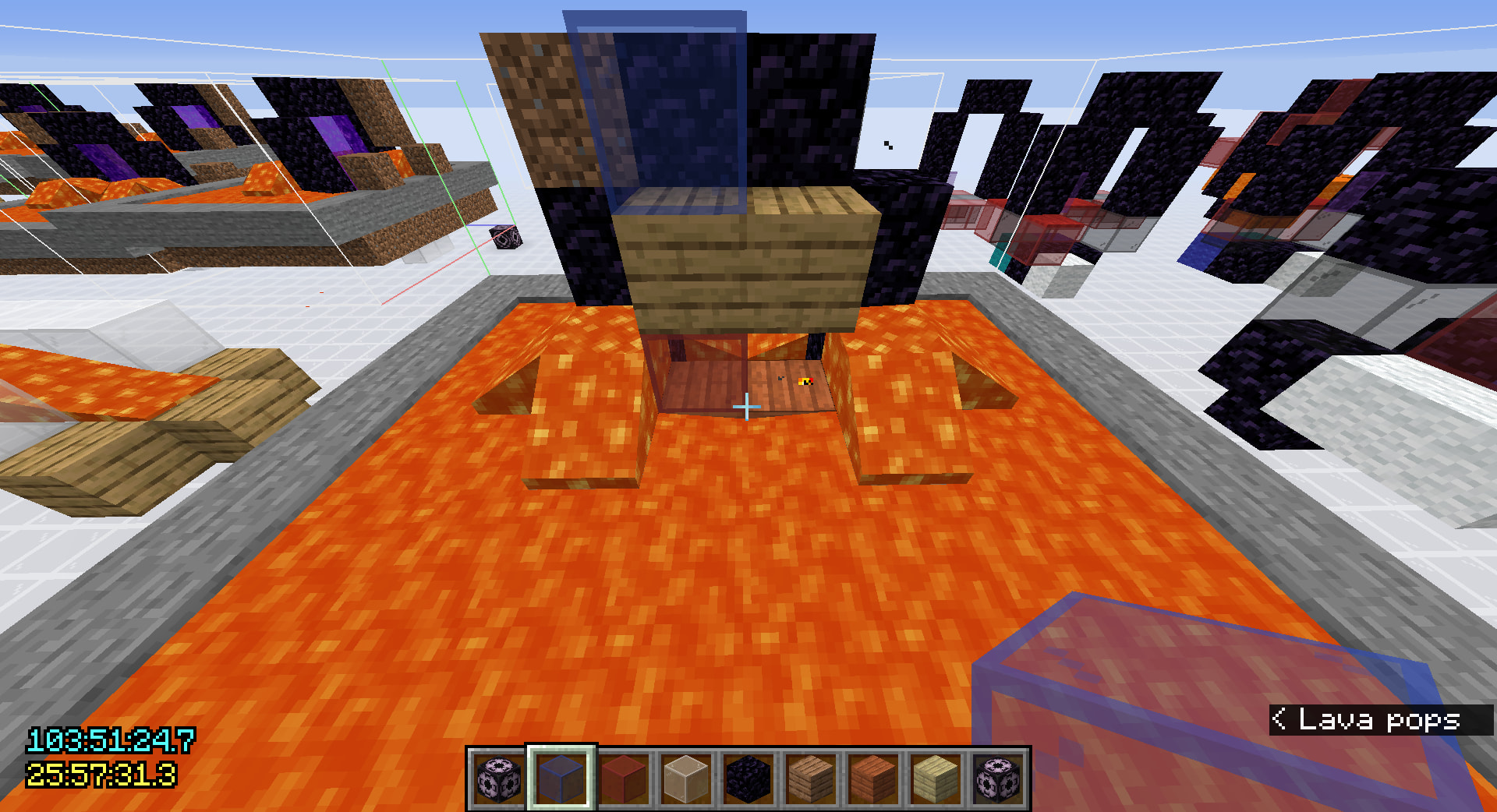
For example, the air block in red stained glass takes chance to light \frac{2}{3} \times 4 \times \frac{1}{9} random ticks from the
4 blocks of lava popping in the 3x3 below it, \frac{1}{3} \times (\frac{4}{9} + \frac{2}{9}) \times \frac{1}{9} random ticks from the 2 blocks of lava popping in the 5x5 below it(the far lava will light the portal directly before it reaches it), and \frac{1}{3} \times 3 \times 4 \times \frac{1}{9} random ticks from the 4 blocks of lava through heating, adding up to \frac{62}{81} lights per random tick or ~1783.74 ticks per light.As for the air block in blue stained glass, it takes chance to light \frac{1}{3} \times (\frac{2}{9} \times 3 + \frac{1}{9} \times 2) \times \frac{1}{9} random ticks from the
5 blocks of lava popping in the 5x5 below it, which is \frac{2}{81} lights per random tick, so in this sense the red air block is 31 times more important than the blue air block.
2.2 Data From Simulations
The Ninjabrain Simulator seems to be giving inaccurate results for setups that utilizes fire spread, which I encountered while simulating the wood light setups by doogile and Infume in their playoff match. So I made a datapack generator that simulates setups directly inside minecraft, which is slow and laggy and also crashes my game every time it hits ~5 minutes(which I suspect is related to the memory leak issue with nether portals in 1.16), but the results should be accurate.
link: WoodLight-Simulator-Datapack-Generator
It also has more features than the original simulator which I will explain later.
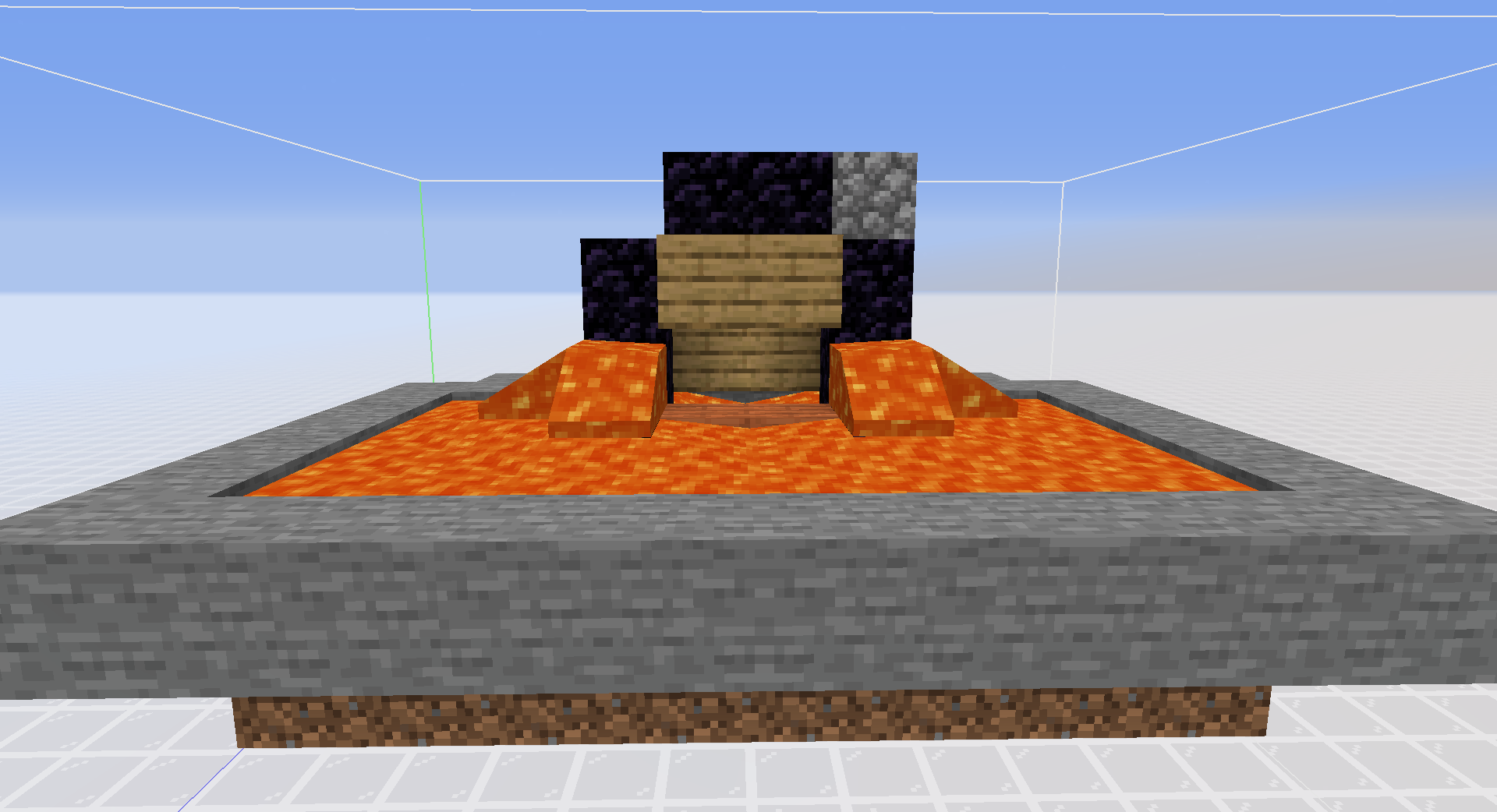
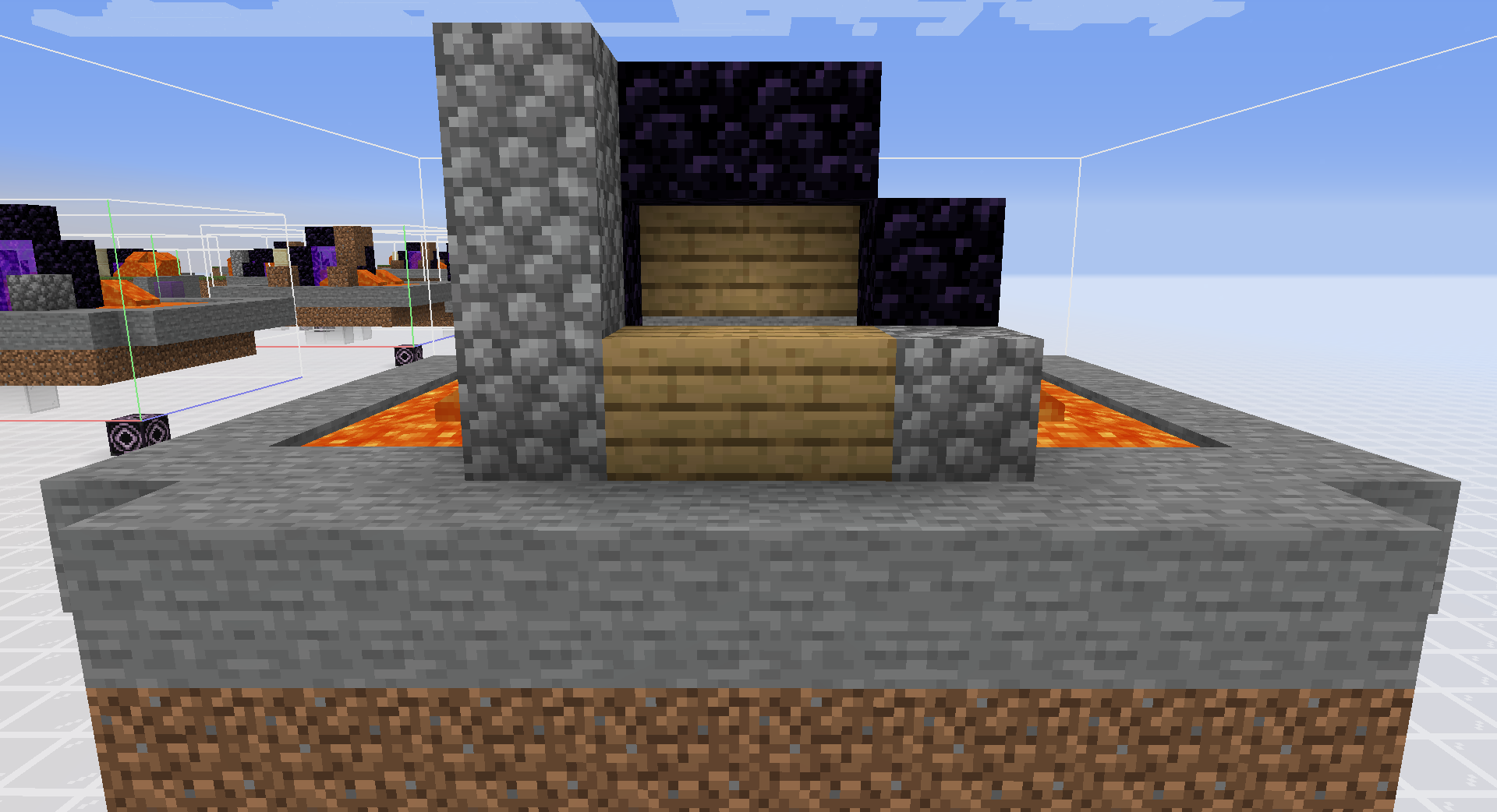
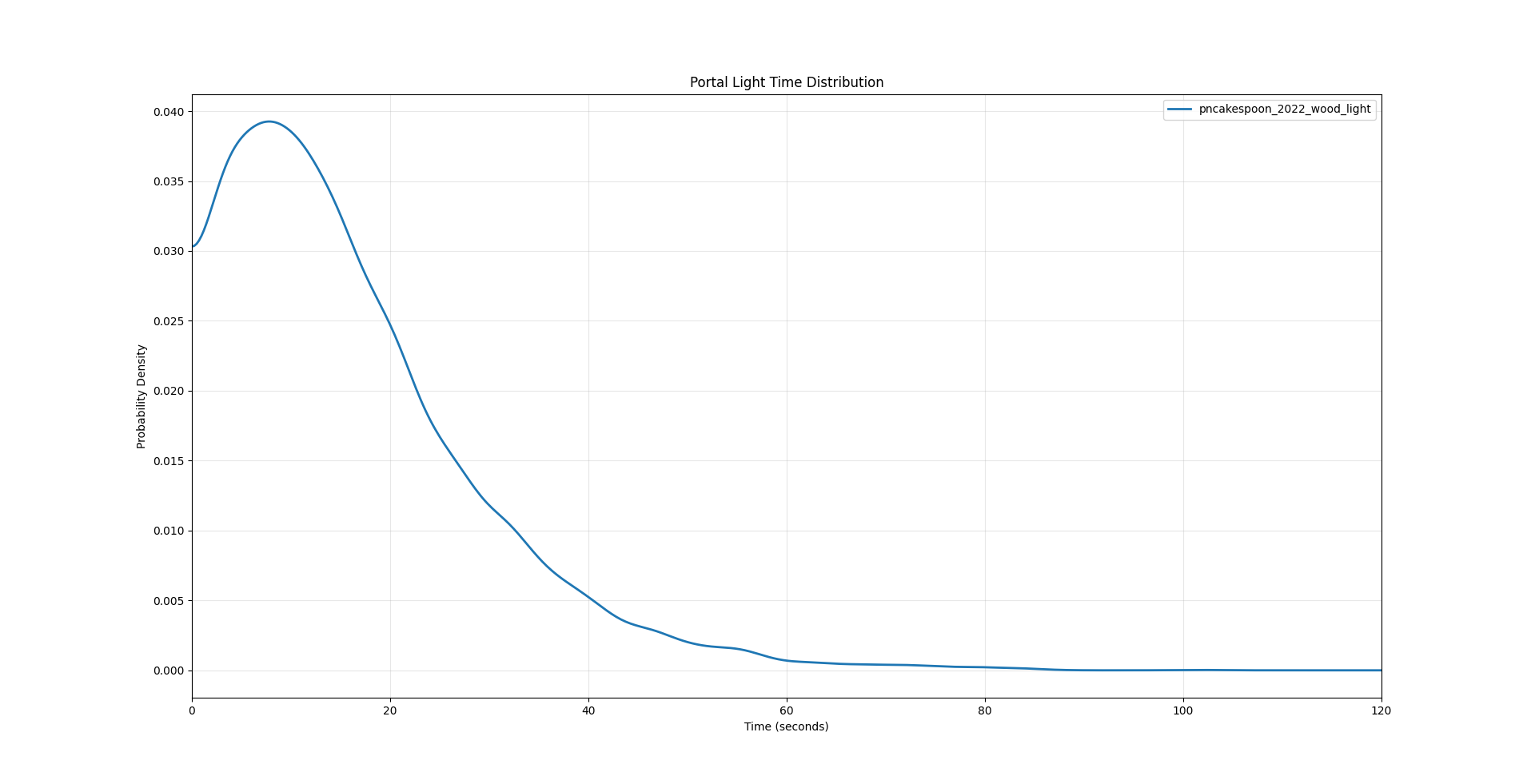
Let’s start with the original setup from pncakespoon:
| Design Name | Avg (s) | Std Err | Std Dev | Samples |
|---|---|---|---|---|
| pncakespoon_2022_wood_light | 16.5286 | 0.1173 | 12.8292 | 11958 |
Note that I used two different types of planks here, acacia planks for the two at lava level and oak for the rest. This of course is not to speed up the wood light itself, it’s because I configured in the datapack generator that acacia planks need to be replaced immediately upon burn out (otherwise the portal will be flooded); by contrast, oak planks are configured only to be replaced when they are turned into air, so if they are burnt into fire we keep it for it to spread.
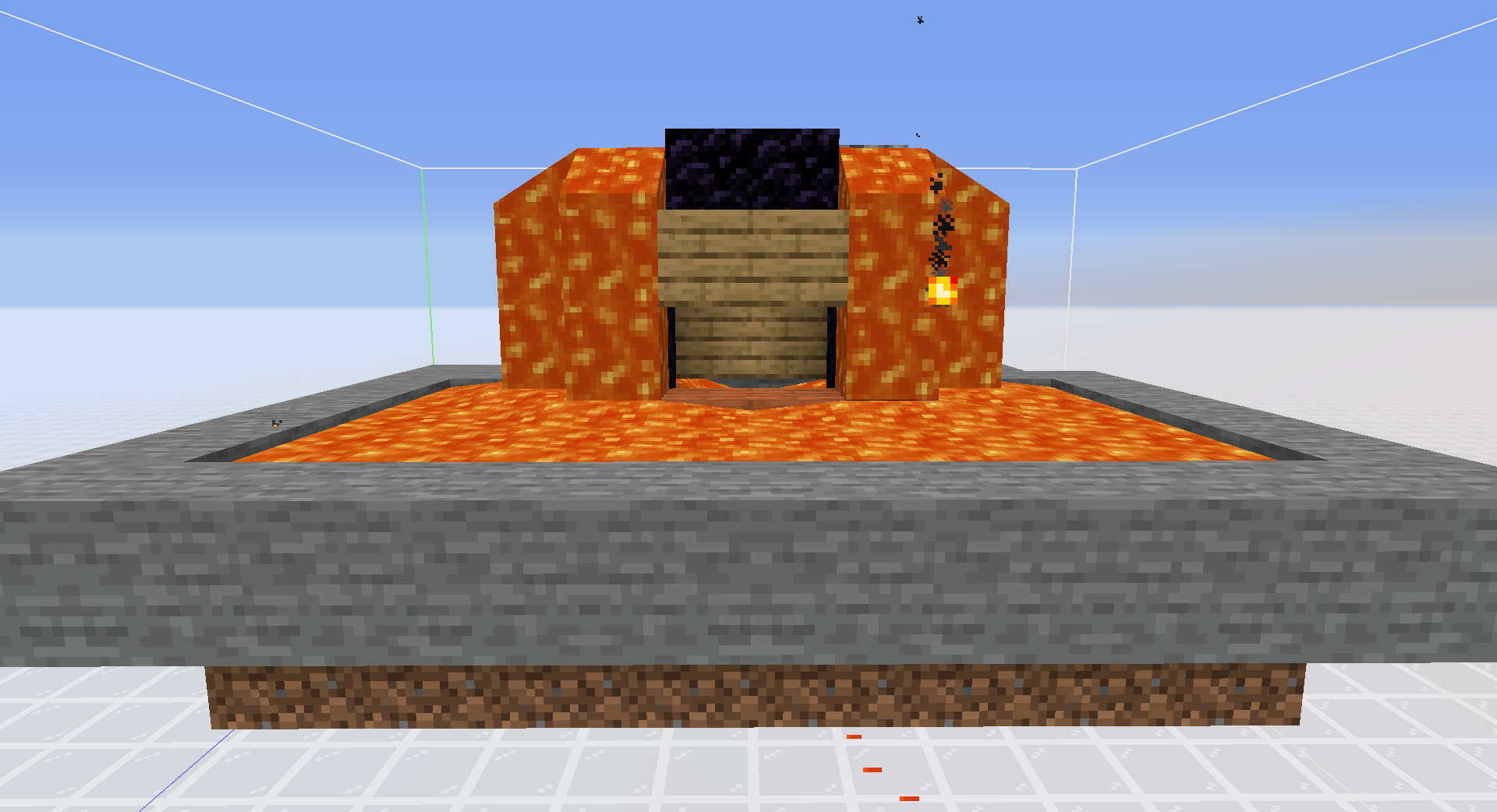
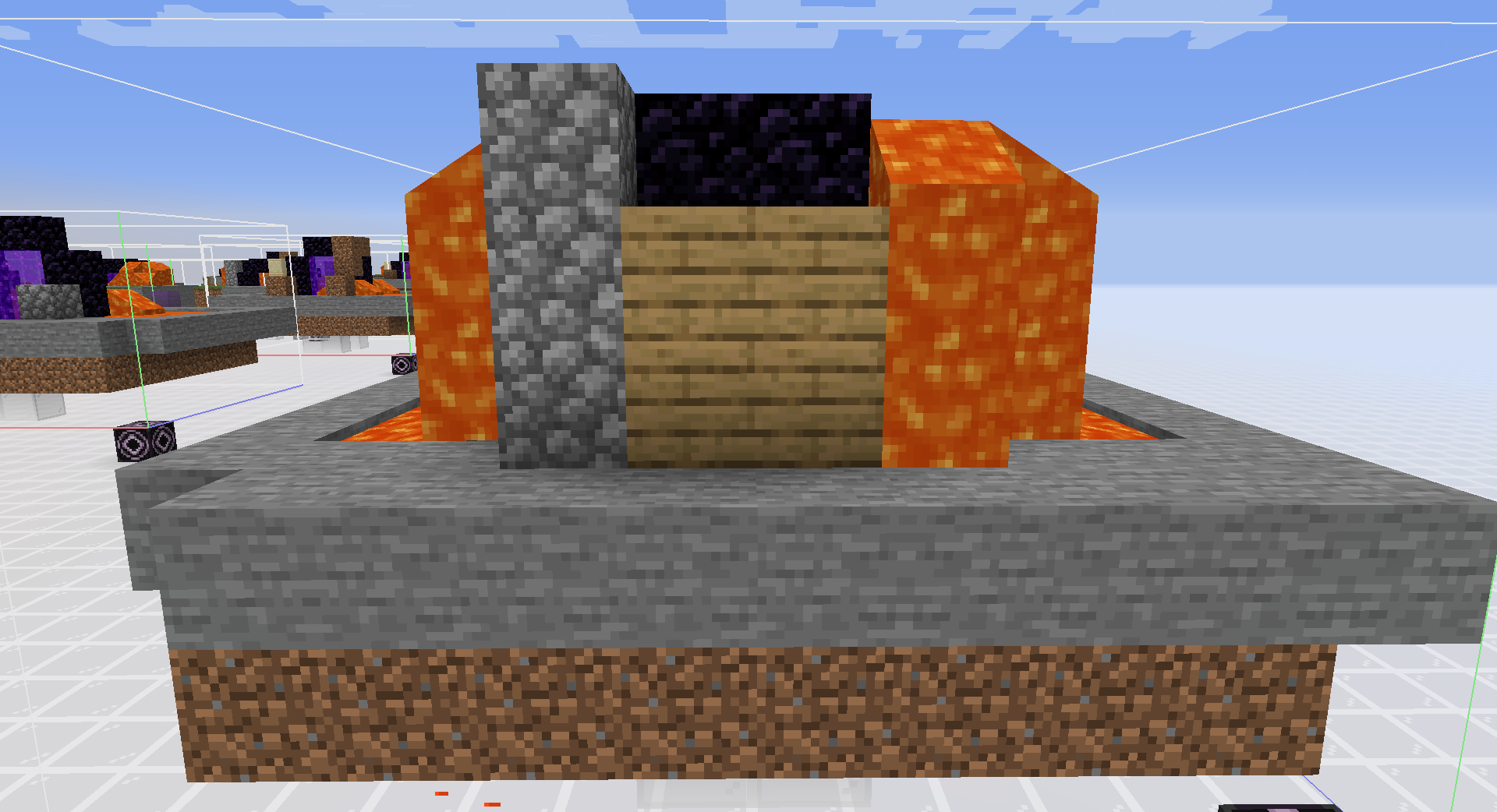
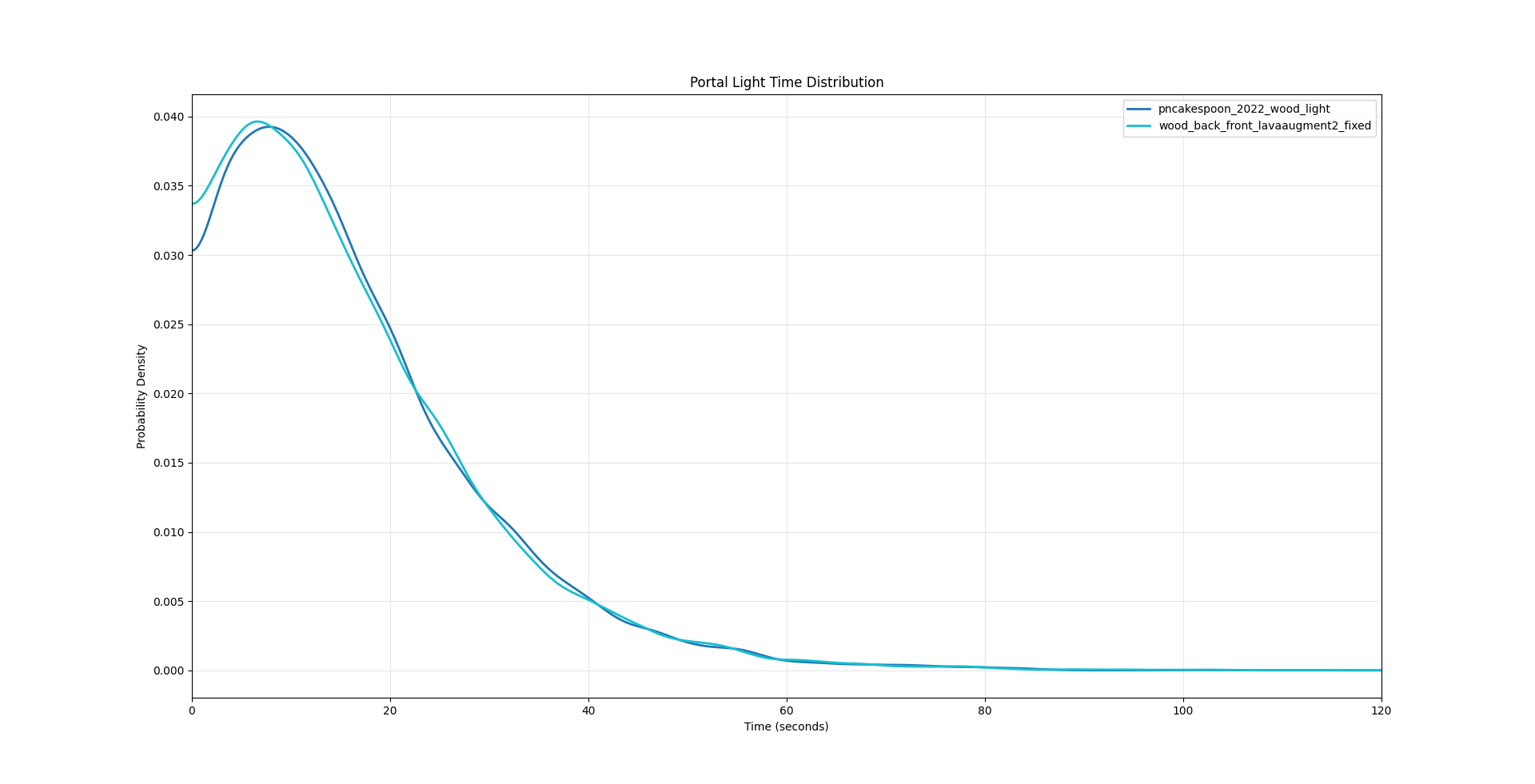
But that isn’t the oldest setup, like this one I found from the demos from Ninjabrain’s simulator (named wood_back_front_lavaaugment2) which some people still do today with 2 planks added top front.
| Design Name | Avg (s) | Std Err | Std Dev | Samples |
|---|---|---|---|---|
| pncakespoon_2022_wood_light | 16.5286 | 0.1173 | 12.8292 | 11958 |
| wood_back_front_lavaaugment2_fixed | 16.3893 | 0.1134 | 13.0278 | 13197 |
Surprisingly, it actually turned out to be faster(within error range so doesn’t really mean anything) in the in game simulator. But it kind of cheated in order to achieve that, specifically, in order to not make the lava on the back flood everywhere(which makes the setup even worse), they mined a block back left(which is the same block that was mined in my micro improved setup, you can mine it in any setup as well), which makes a block of lava there can diretly light the portal. Combined with 2 extra lava that can light the air on top of the back top plank(which the Ninjabrain simulator handled poorly), it makes the setup barely better on paper. But obviously it takes longer for the lava to flow down so it is still just worse anyway.
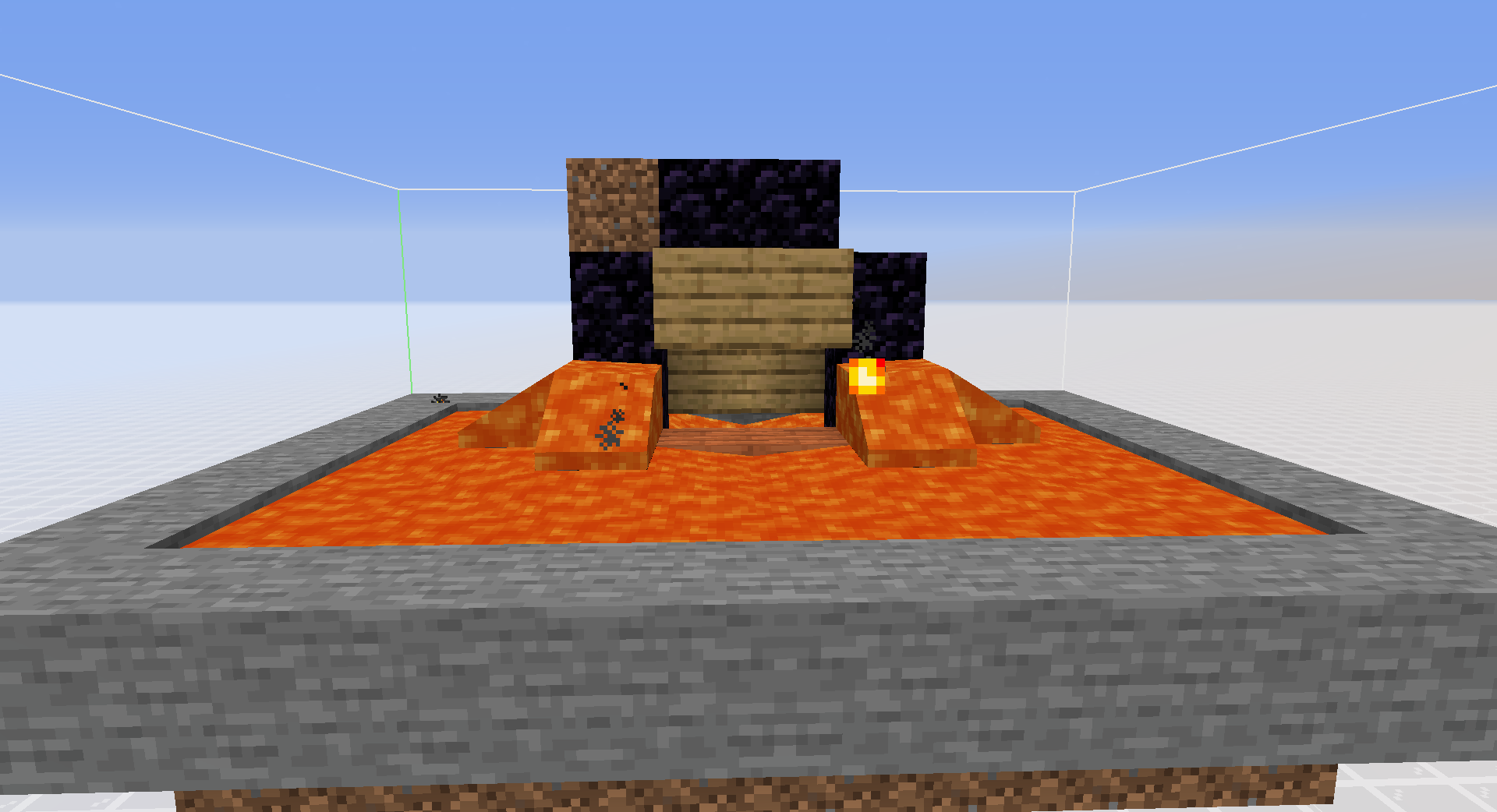
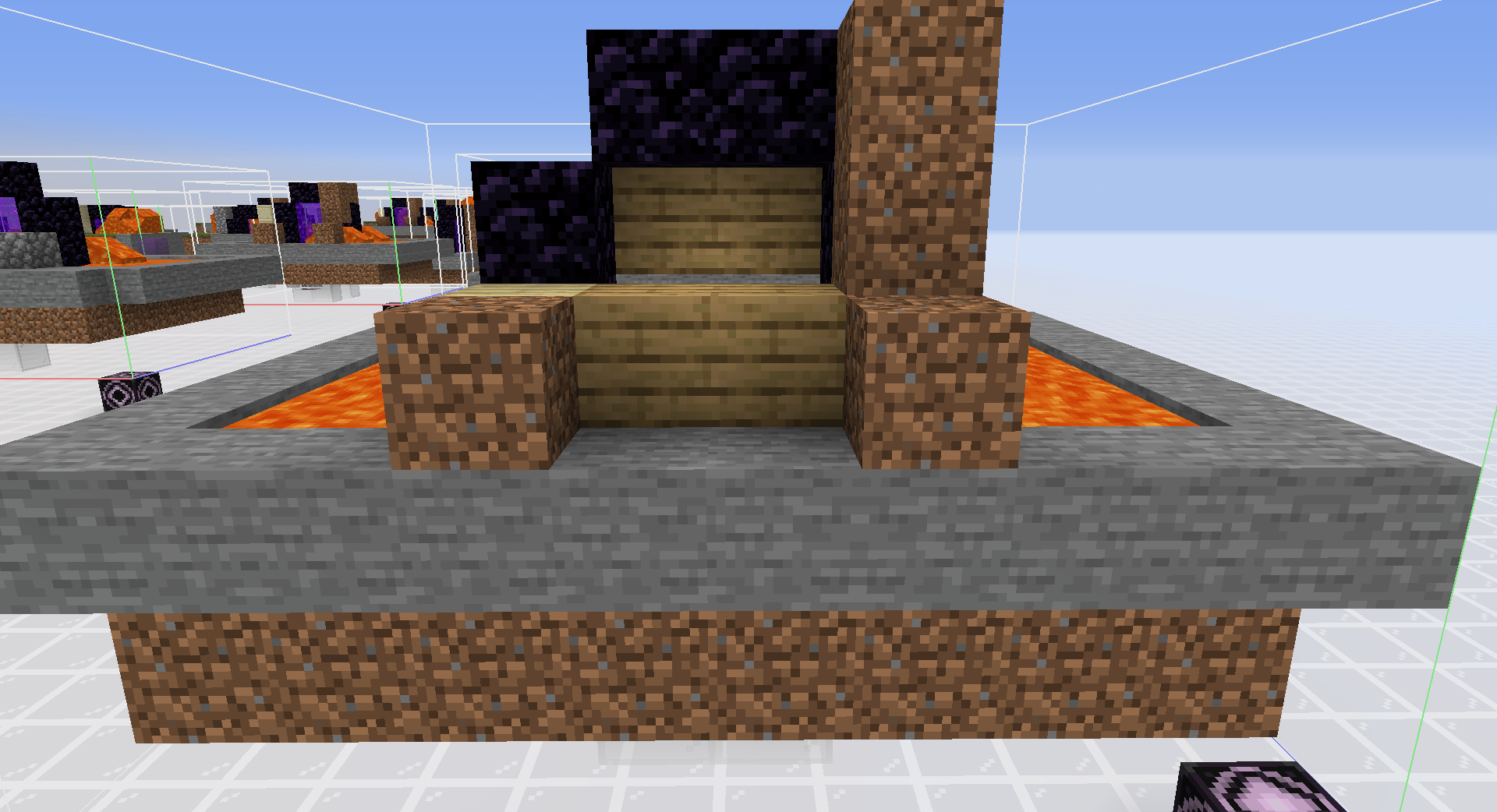
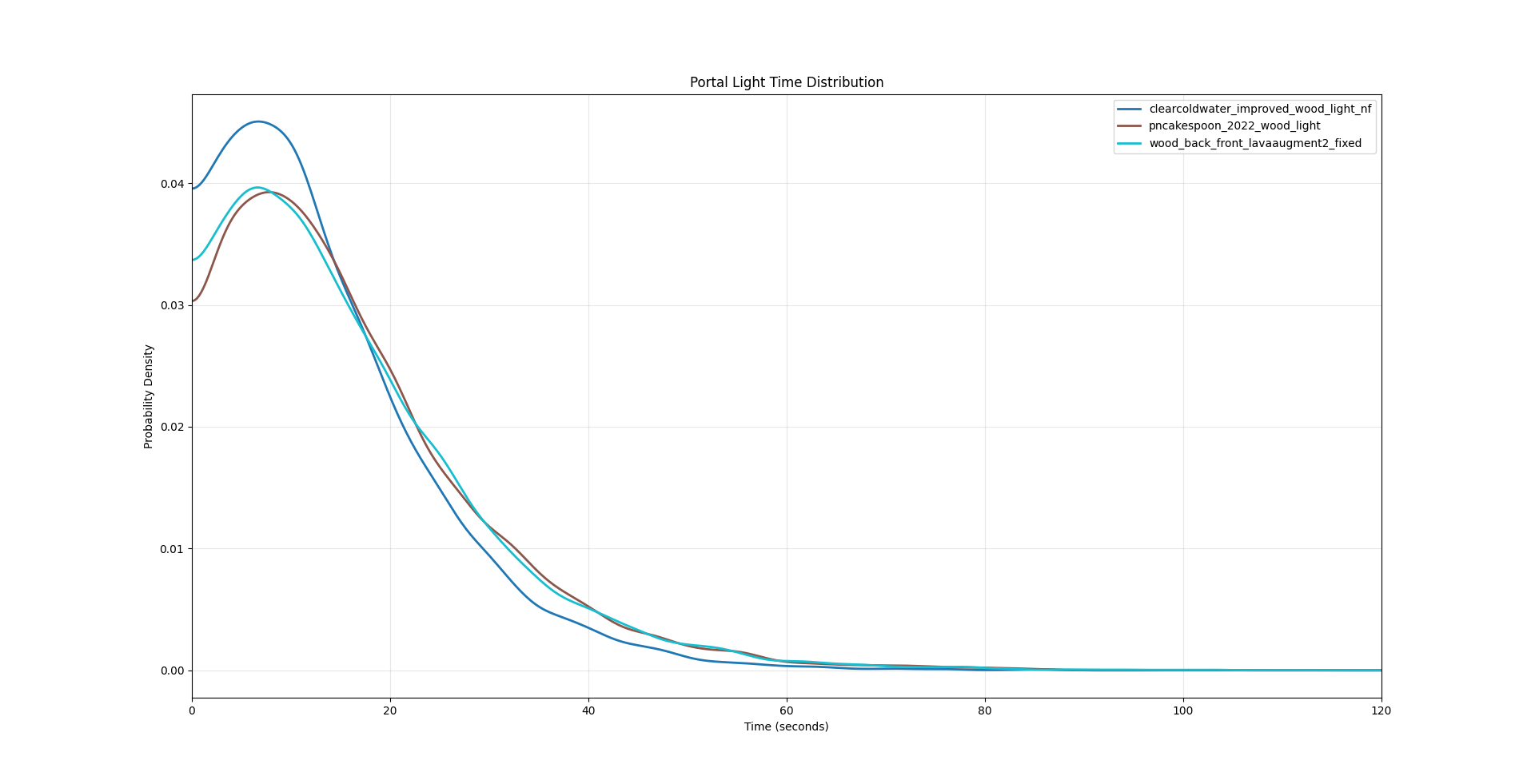
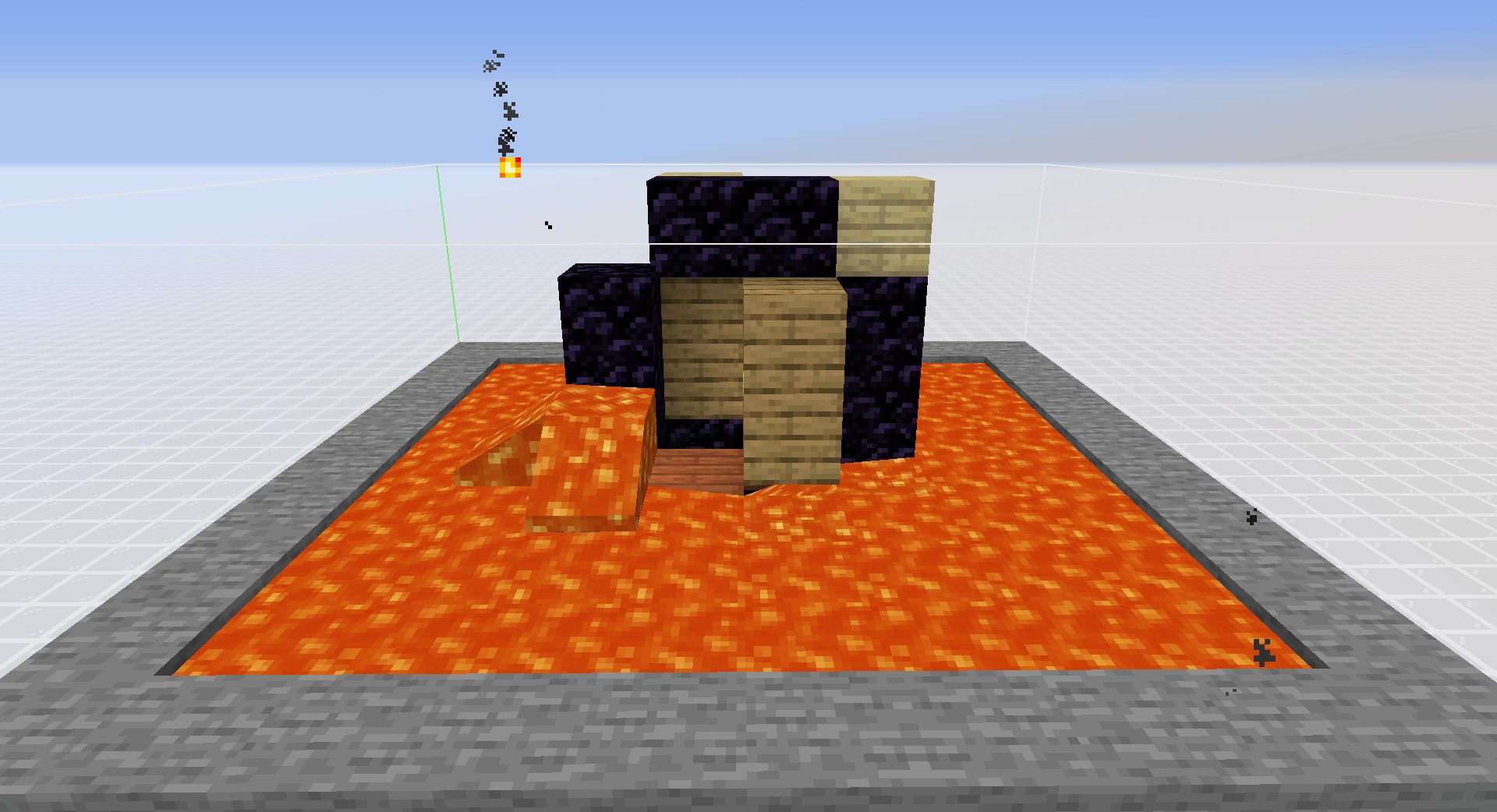
Now here’s the micro improved setup I made:
| Design Name | Avg (s) | Std Err | Std Dev | Samples |
|---|---|---|---|---|
| clearcoldwater_improved_wood_light_nf | 14.0469 | 0.0946 | 10.9941 | 13496 |
| pncakespoon_2022_wood_light | 16.5286 | 0.1173 | 12.8292 | 11958 |
| wood_back_front_lavaaugment2_fixed | 16.3893 | 0.1134 | 13.0278 | 13197 |
I have already explained why it is good in the post I made about it. Note that there is a new type of wood plank here, birch planks, which is configured to do nothing when they burn out.
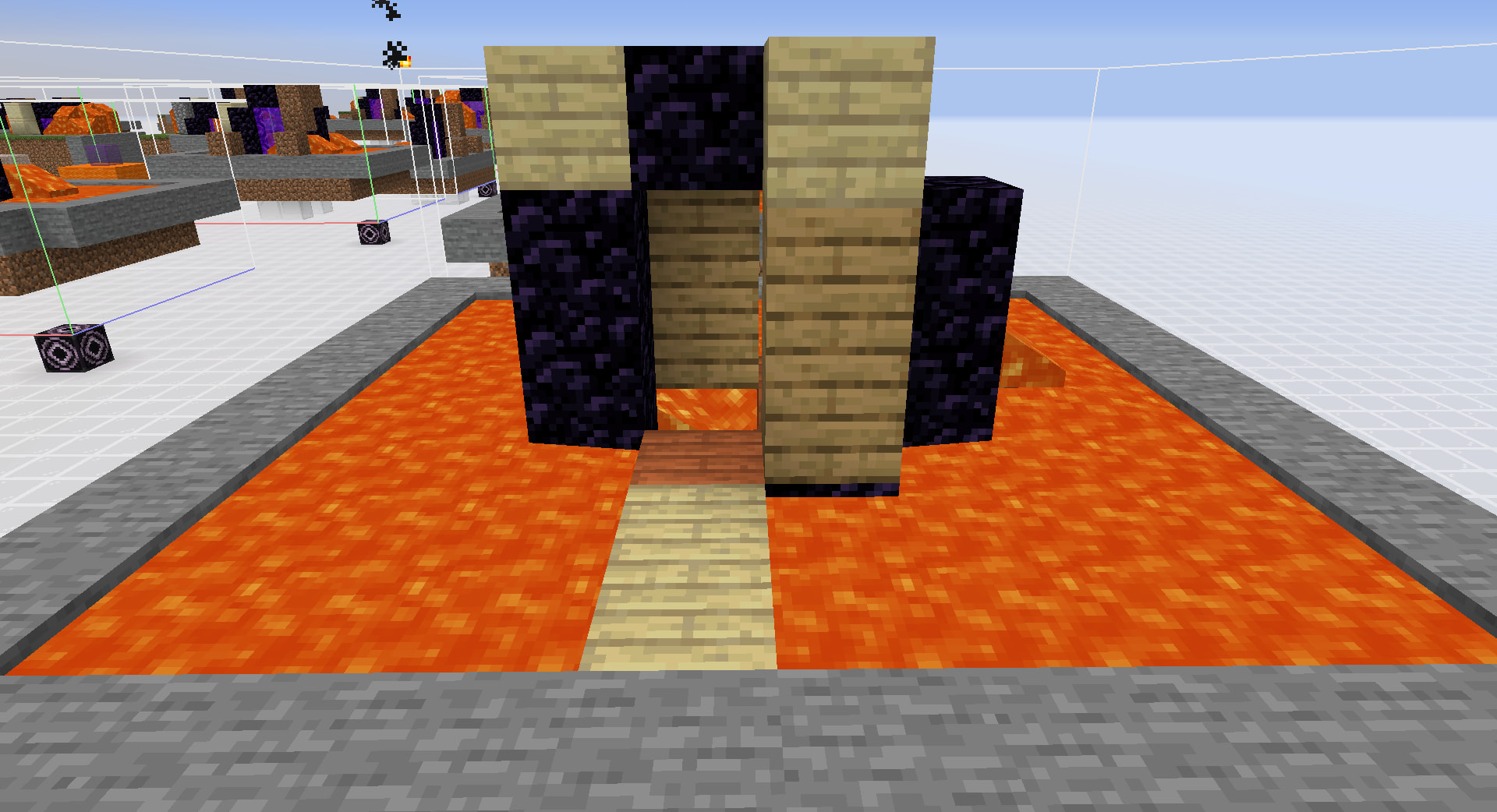
Fyroah’s wokelight (tested the last one):
| Design Name | Avg (s) | Std Err | Std Dev | Samples |
|---|---|---|---|---|
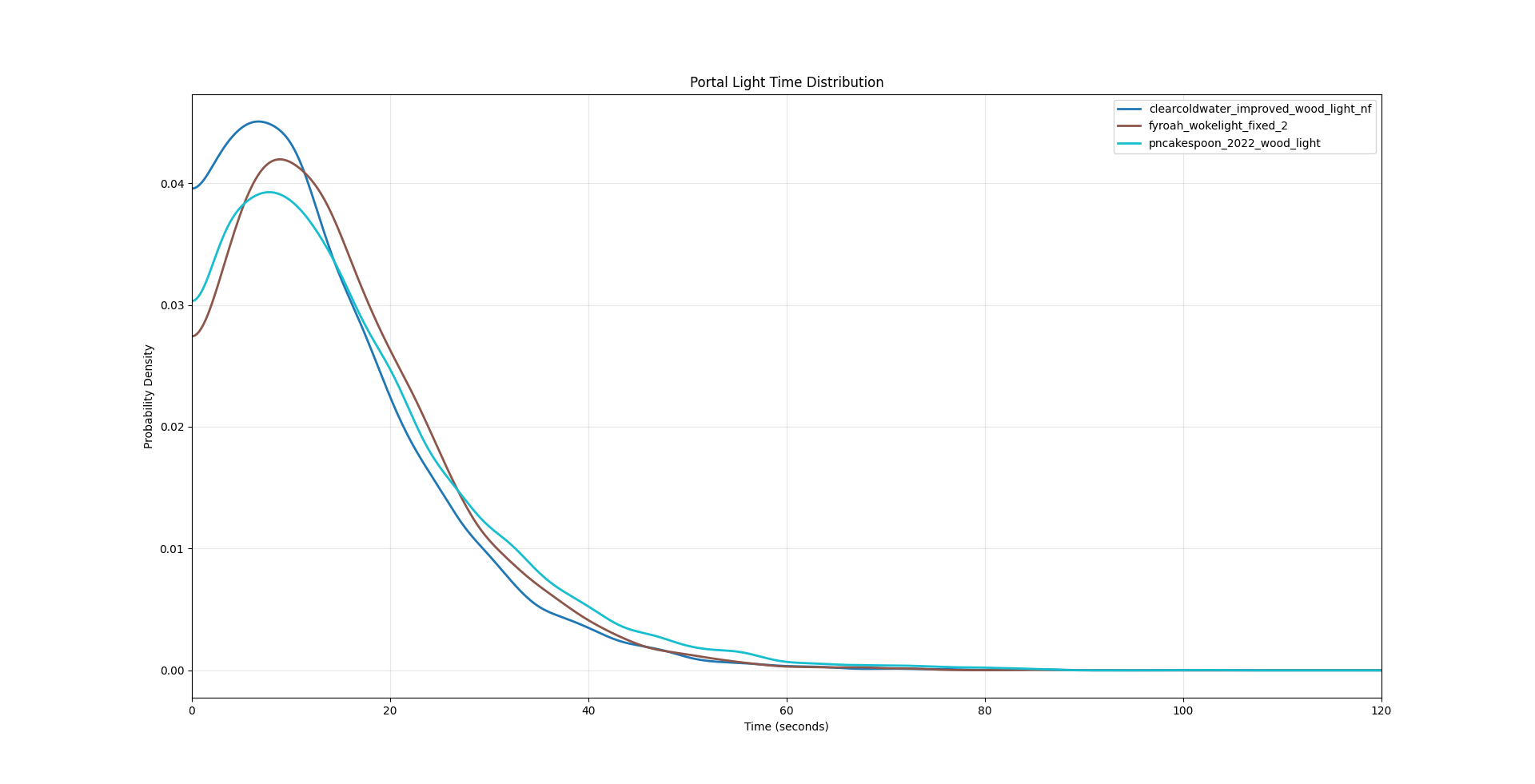
| clearcoldwater_improved_wood_light_nf | 14.0469 | 0.0946 | 10.9941 | 13496 |
| fyroah_wokelight_fixed_2 | 15.5234 | 0.0924 | 11.0209 | 14241 |
| pncakespoon_2022_wood_light | 16.5286 | 0.1173 | 12.8292 | 11958 |
Despite being allowed to use 4 more planks, given a massive lava pool, taking 3+ seconds to setup, it is only 1 second faster on average than the pncakespoon setup.
doogile’s playoffs carpet light setup:
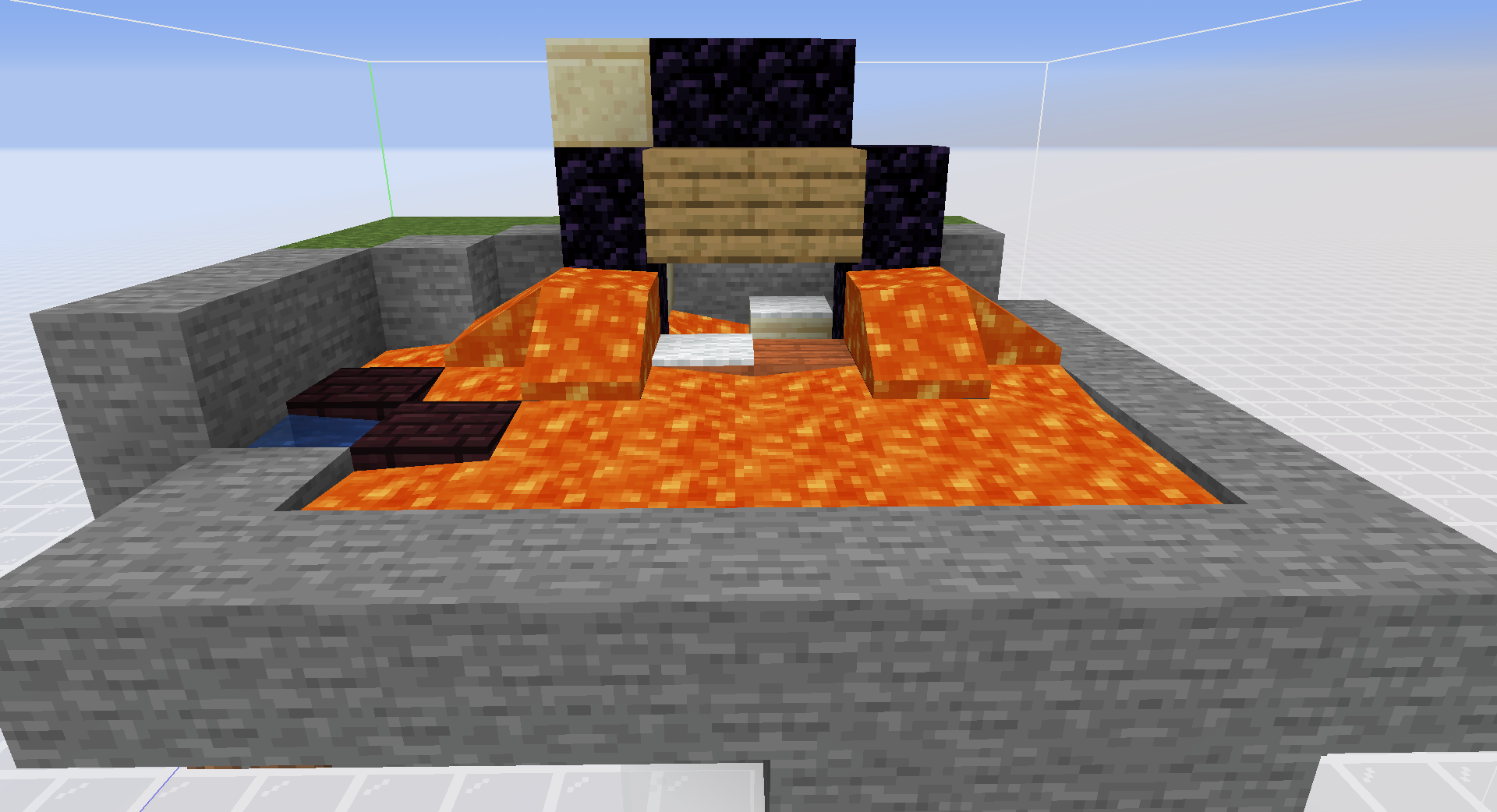
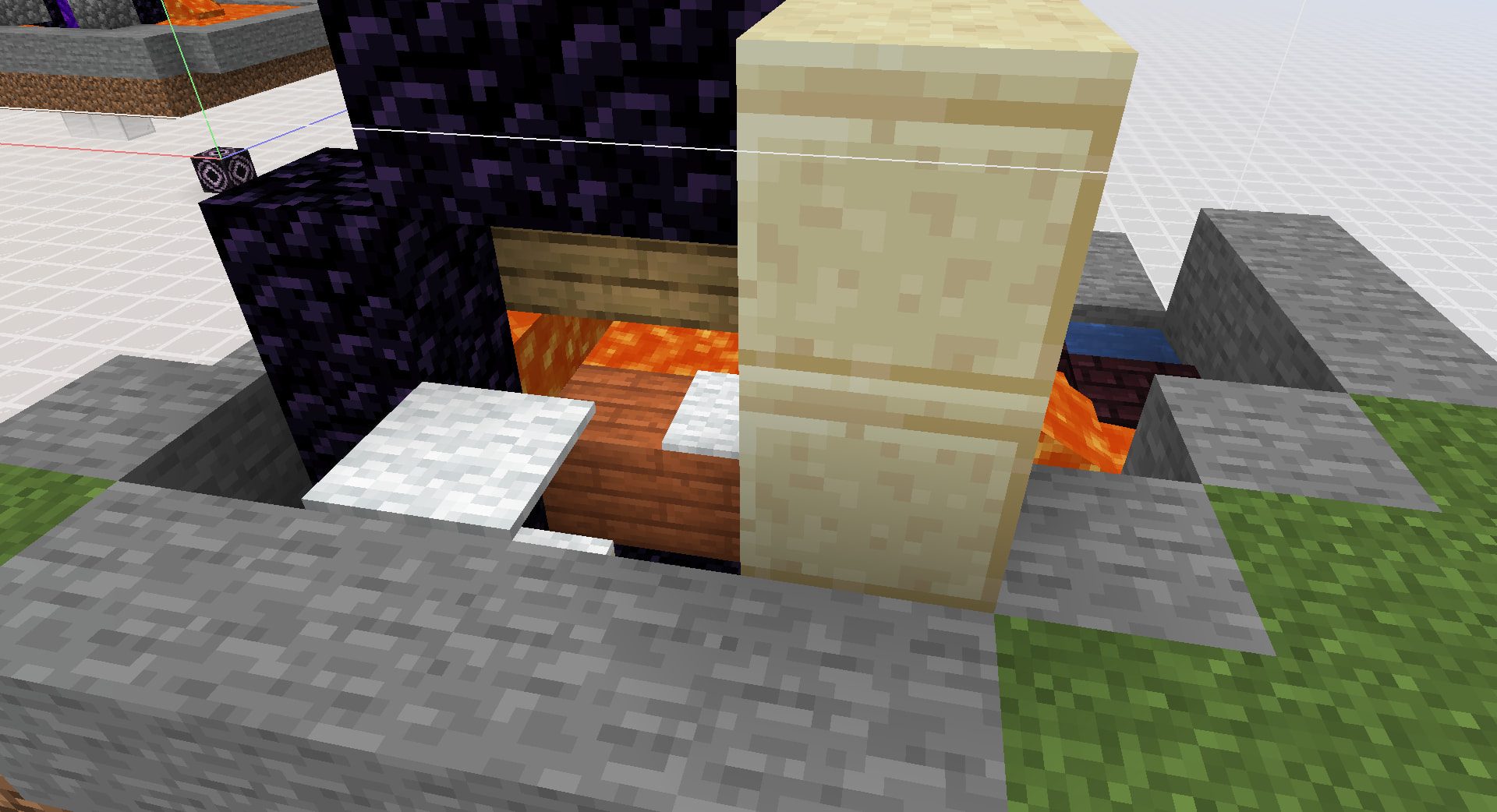
Note that white carpets are configured to be replaced with oak planks when they turn into air.
infume’s playoffs wood light setup:
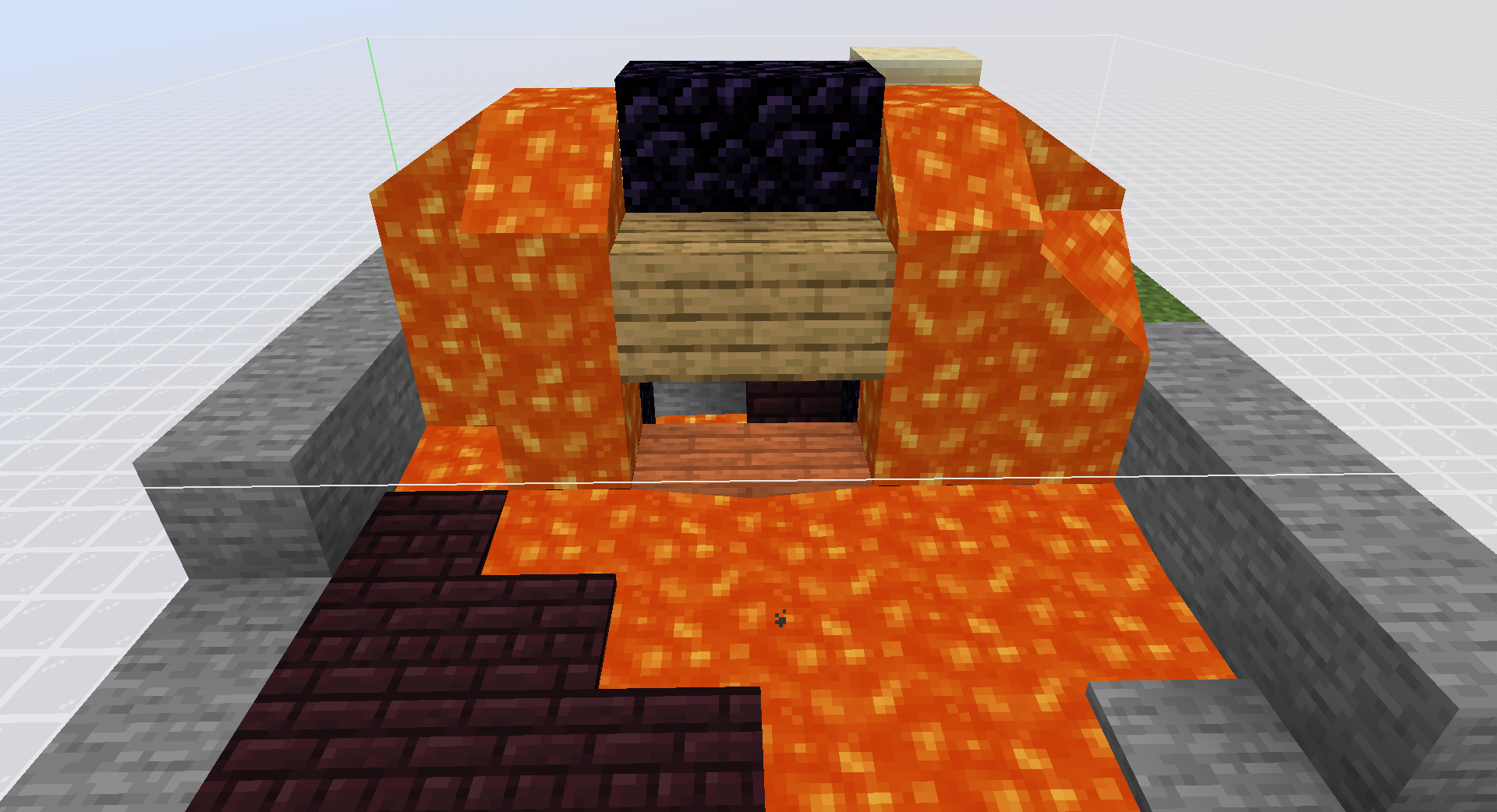
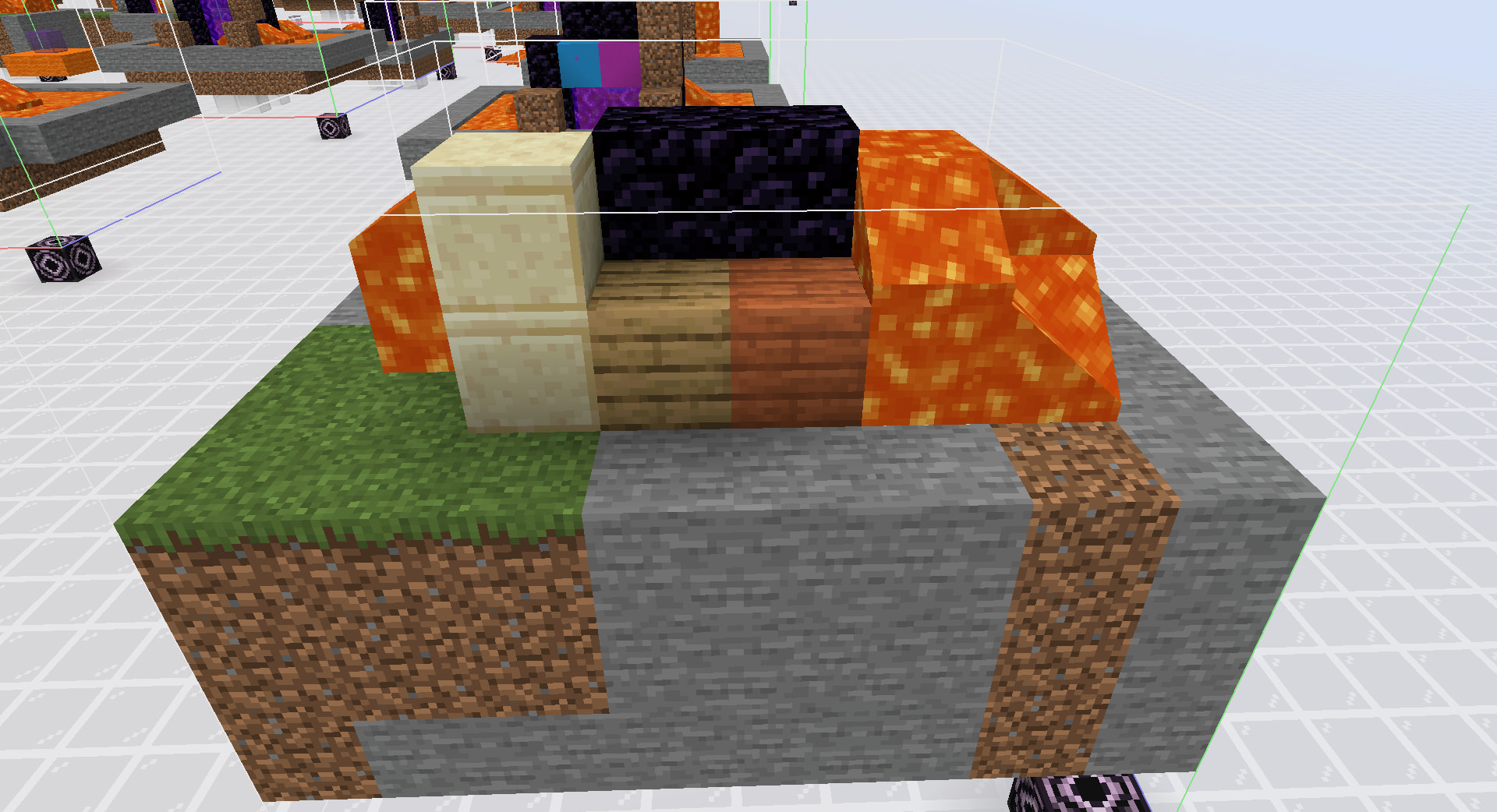
Note that the top left plank is acacia because when it burns out lava can flood the portal.
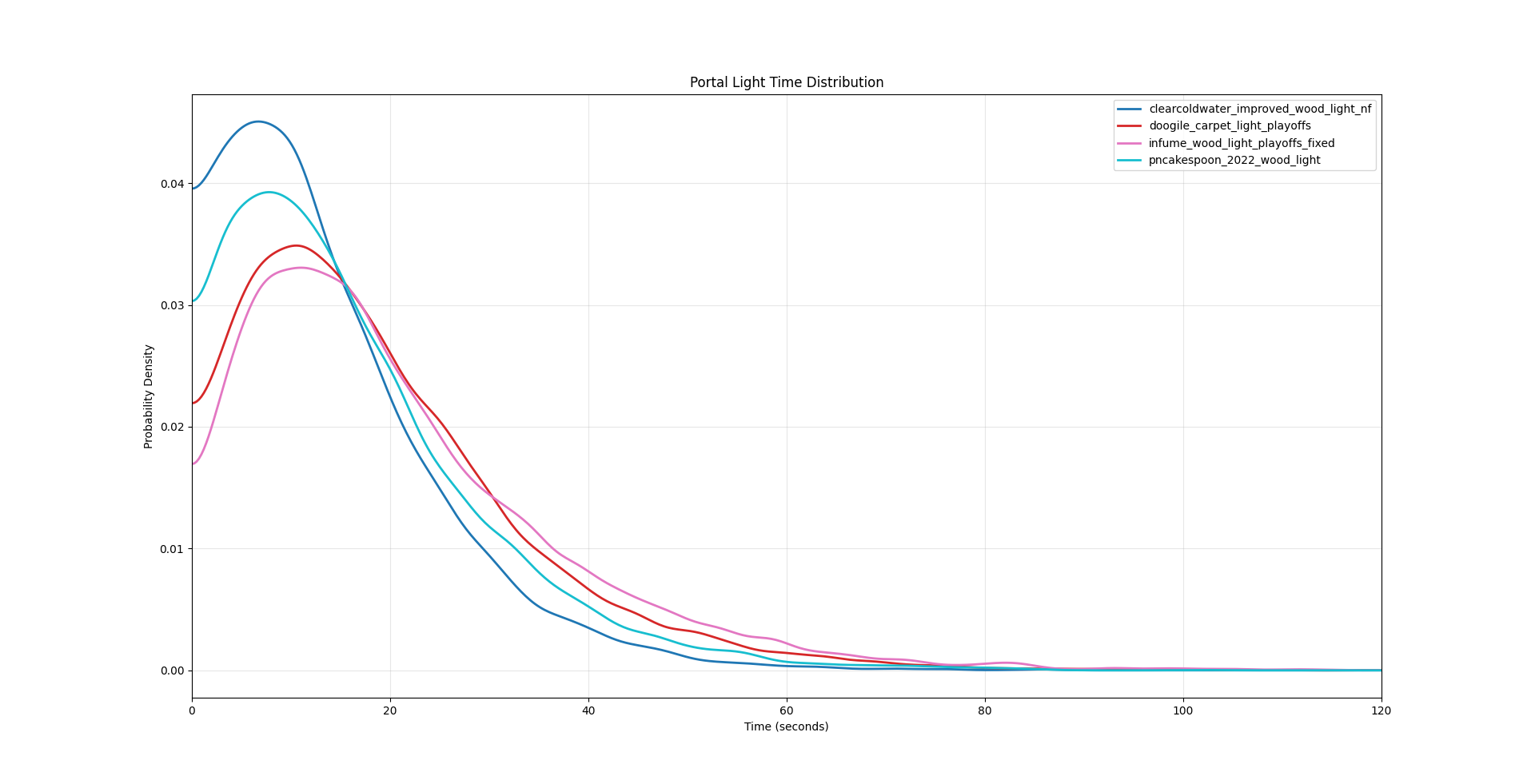
| Design Name | Avg (s) | Std Err | Std Dev | Samples |
|---|---|---|---|---|
| clearcoldwater_improved_wood_light_nf | 14.0469 | 0.0946 | 10.9941 | 13496 |
| doogile_carpet_light_playoffs | 19.1589 | 0.1344 | 14.2557 | 11245 |
| infume_wood_light_playoffs_fixed | 21.0588 | 0.1672 | 15.9085 | 9057 |
| pncakespoon_2022_wood_light | 16.5286 | 0.1173 | 12.8292 | 11958 |
So Infume did get pretty unlucky for a 60 seconds light after setup complete, but that is also kind of his fault for making a sub-optimal setup that its PDF has such a long tail. doogile on the other hand definitely got pretty lucky, as his setup is still a lot worse than the og setup but got an insta-light.
So what has gone wrong for these two setups?
For doogile, his setup is built as intended, so it is just the setup itself being bad: the carpet on front covered an important air block that is above planks at lava level which has boosted chance of lighting through heating; in order to place the two carpets on the back, 3 blocks of important lava was sacrifised, and the lava remaining on the left has way less effect because there is no flammable block on the left anymore.
For Infume, he flooded his first portal, as a result 6 blocks of lava in range that can affect the wood light are turned into obsidian. This is not really a big issue as those blocks of lava are unimportant and probably has max .2 seconds affect in total on average. However, he turned a block of lava on the back of the portal into obsidian, which is a massive issue that losses him the chance of placing 3 blocks worth of important lava, despite this he just decided to place lava below the bottom planks level and lose himself another 1 important lava. He also built his portal back against a wall, which is especially worse for the setup he made that depends more on fire spread than direct lighting.
Carpet light that I believe is credit to edcr:
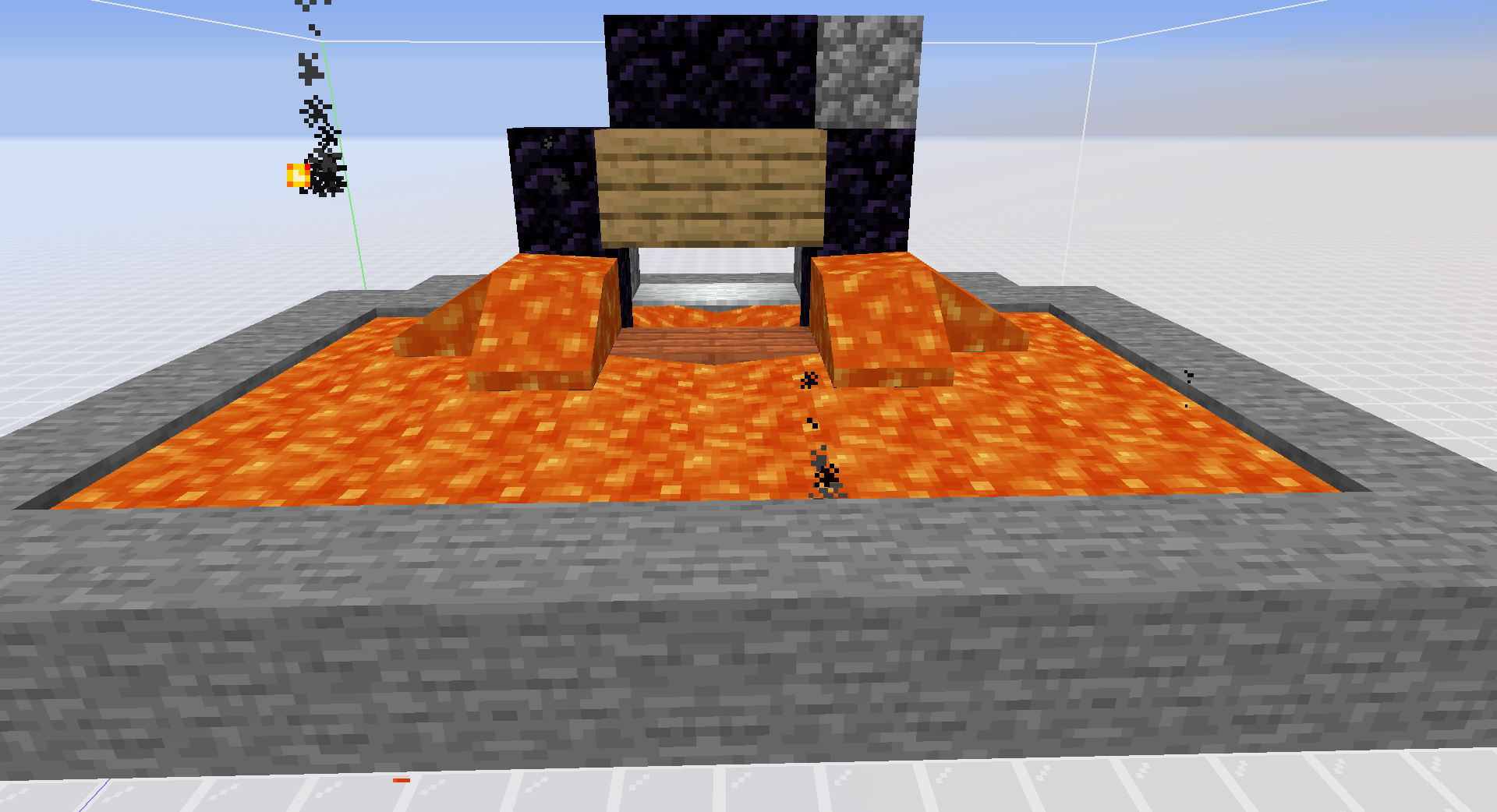
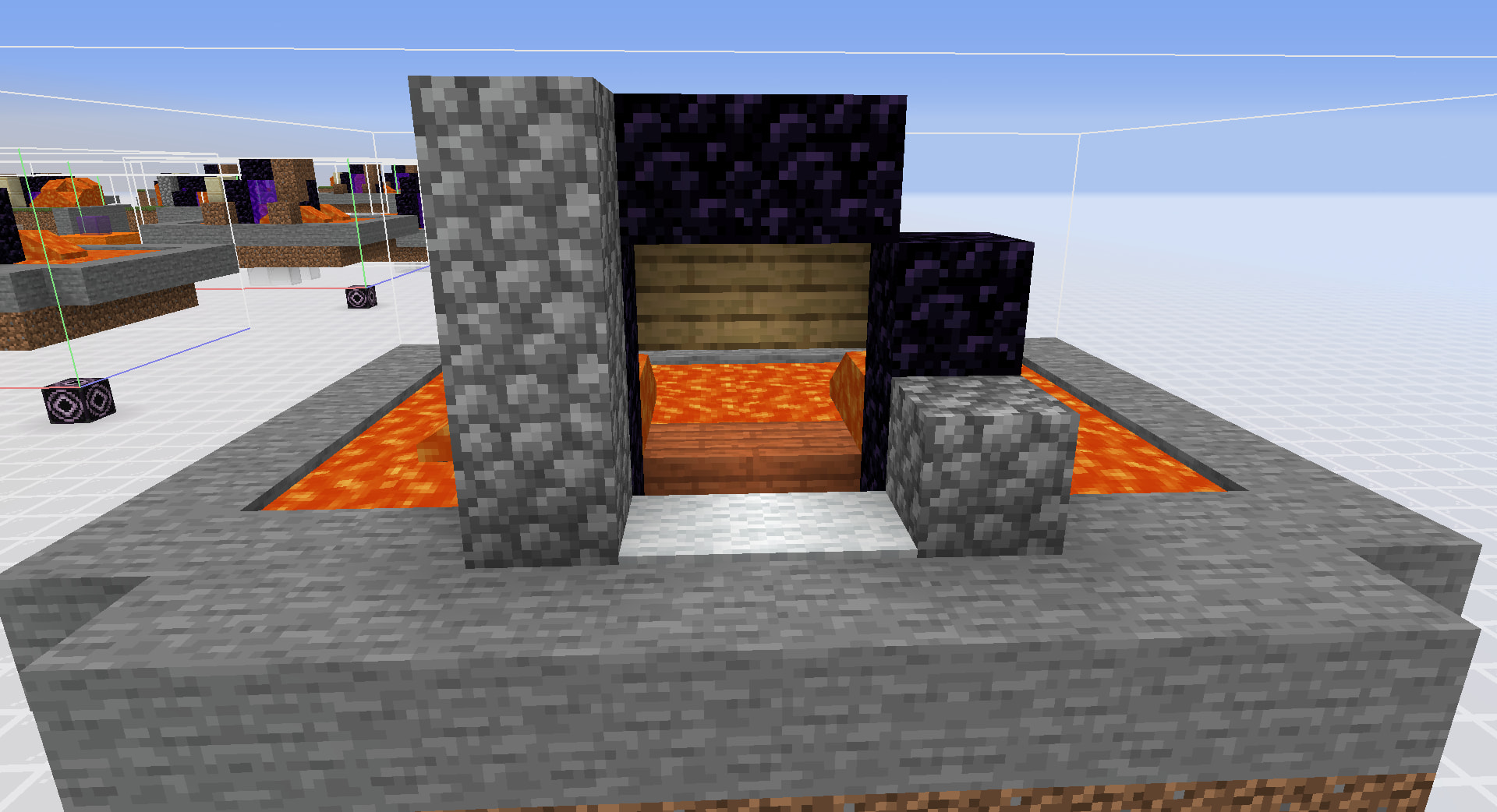
edcr carpets combined with my improvements:
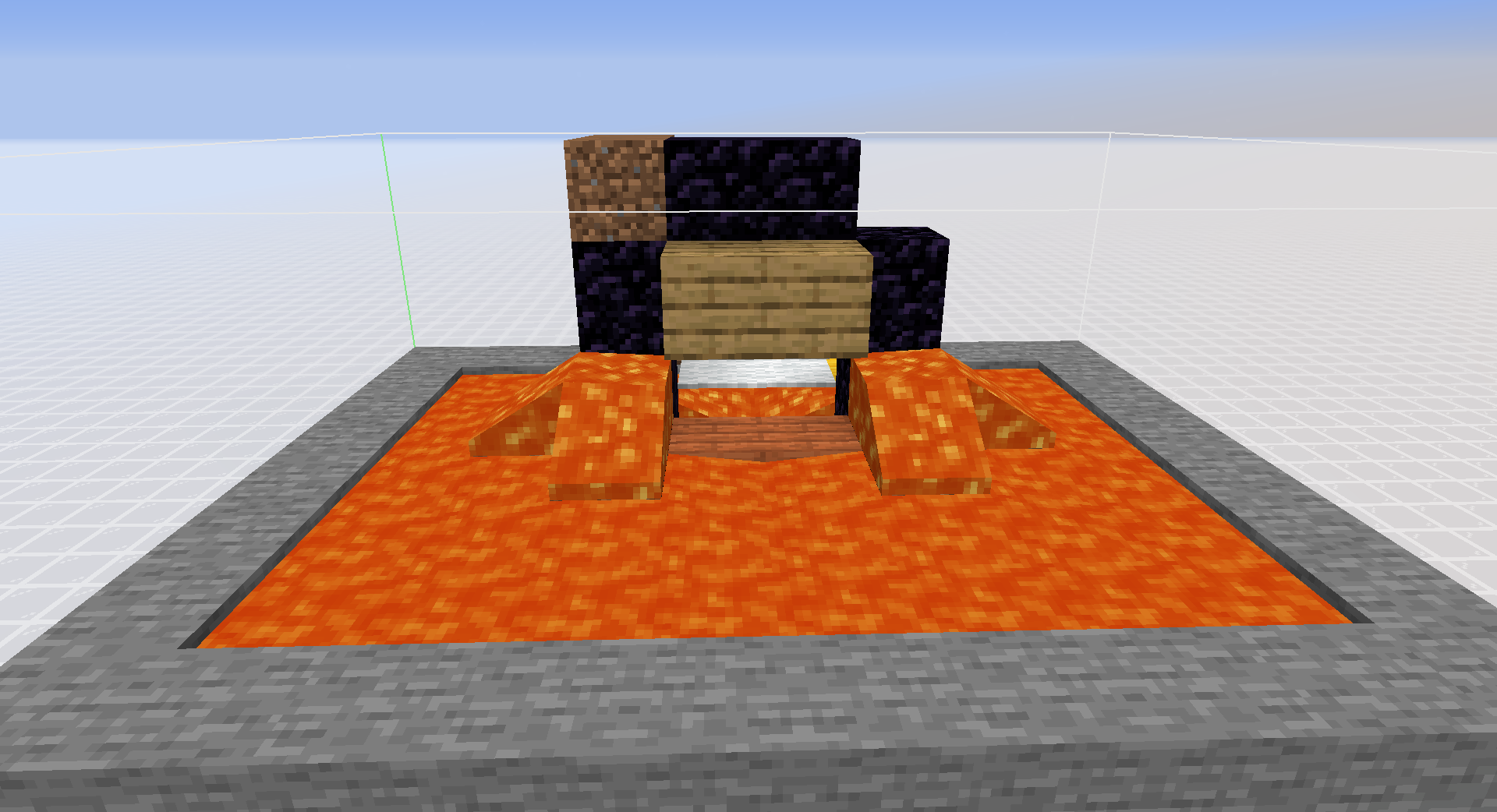
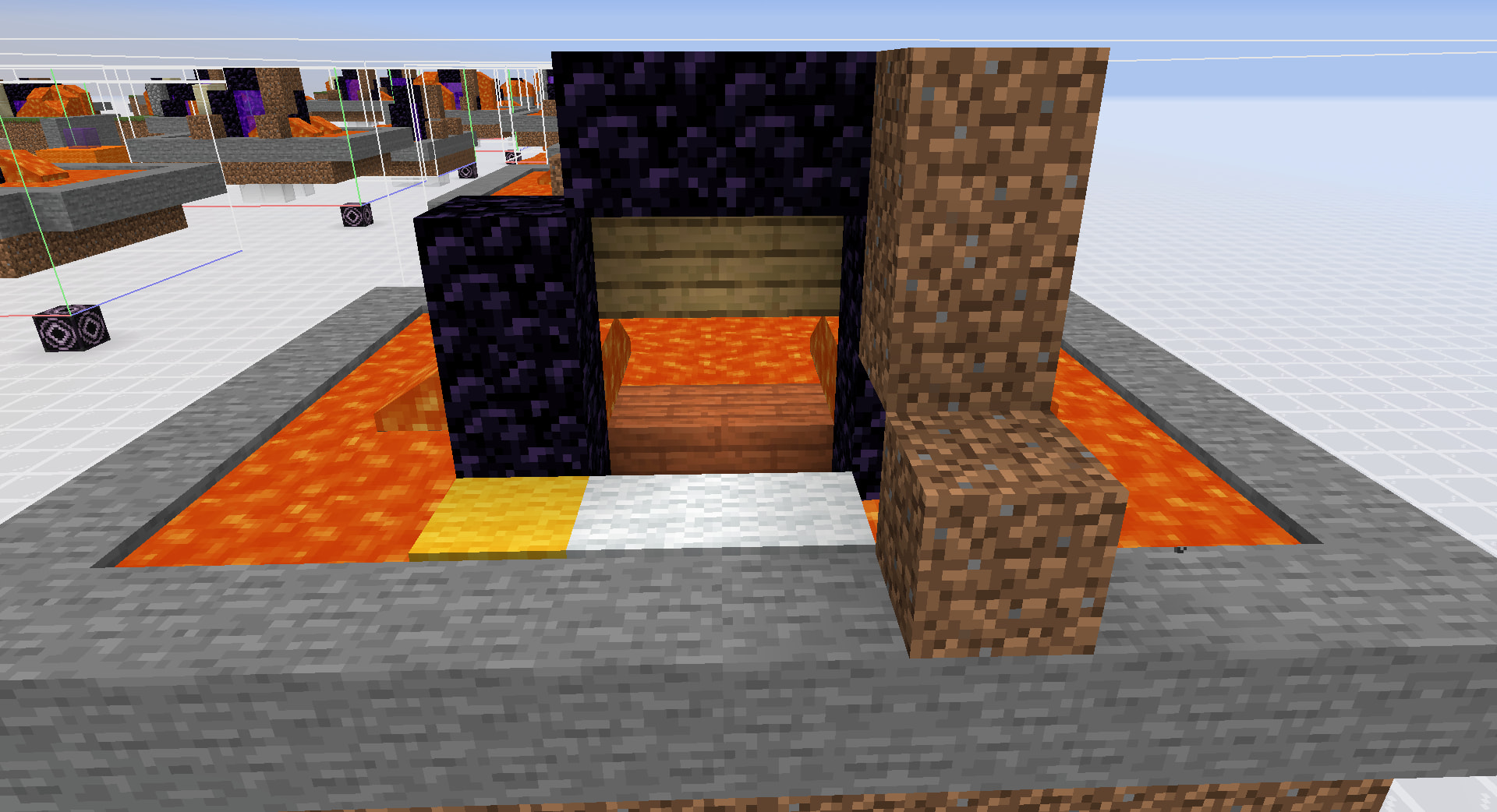
The yellow carpet here has the same effect as birch planks, that is to not be replaced by anything when burnt out.
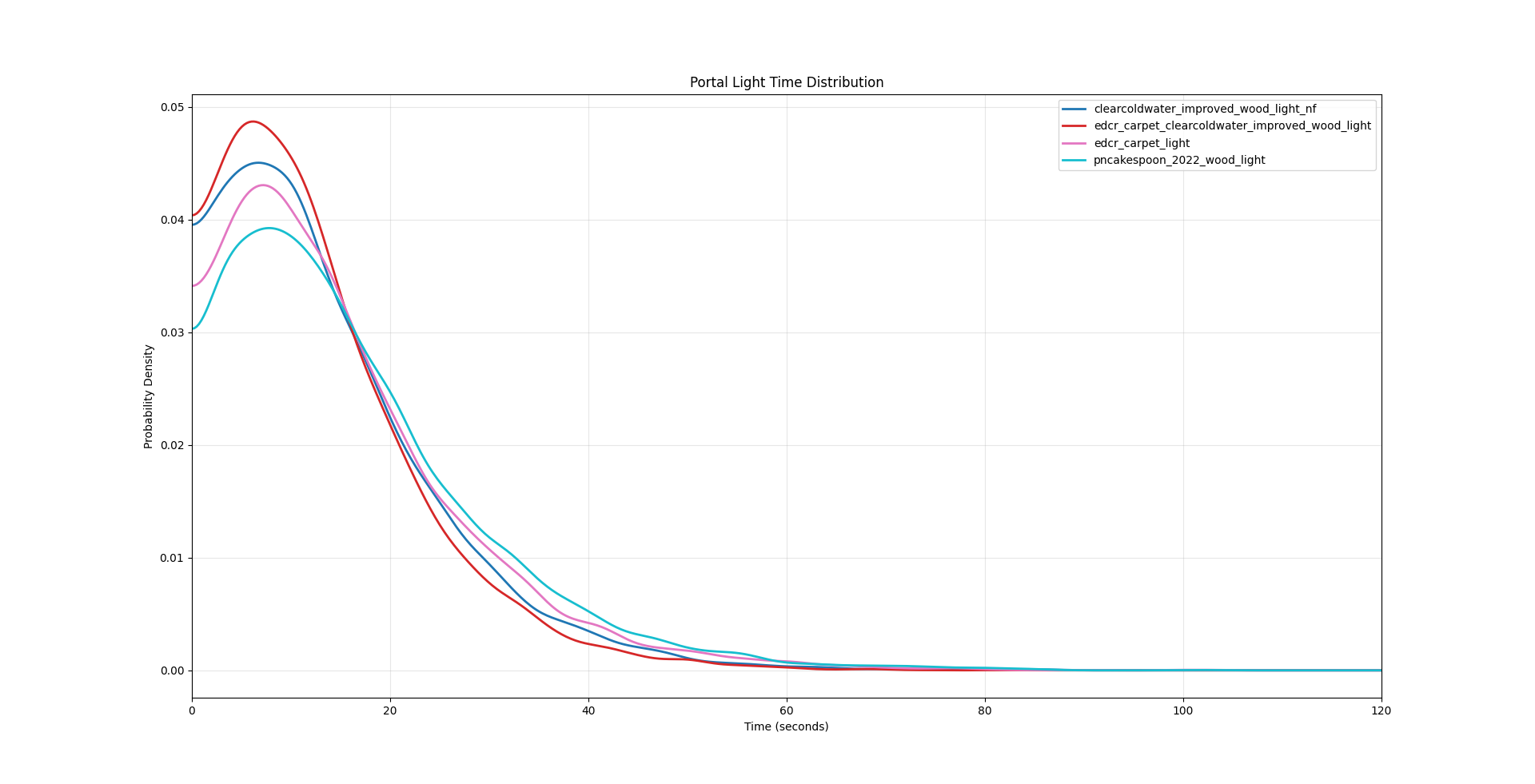
| Design Name | Avg (s) | Std Err | Std Dev | Samples |
|---|---|---|---|---|
| clearcoldwater_improved_wood_light_nf | 14.0469 | 0.0946 | 10.9941 | 13496 |
| edcr_carpet_clearcoldwater_improved_wood_light | 13.0375 | 0.0792 | 10.0045 | 15952 |
| edcr_carpet_light | 15.3544 | 0.1041 | 12.1261 | 13563 |
| pncakespoon_2022_wood_light | 16.5286 | 0.1173 | 12.8292 | 11958 |
It is only a 1.2 seconds improvement over the og setup and 1 second improvement over my improved setup, so I think it is not worth the potential extra explosive.
the important part that 99% of people care about is done :D
now i'm gonna procrastinate for another 5 hours to write the rest